
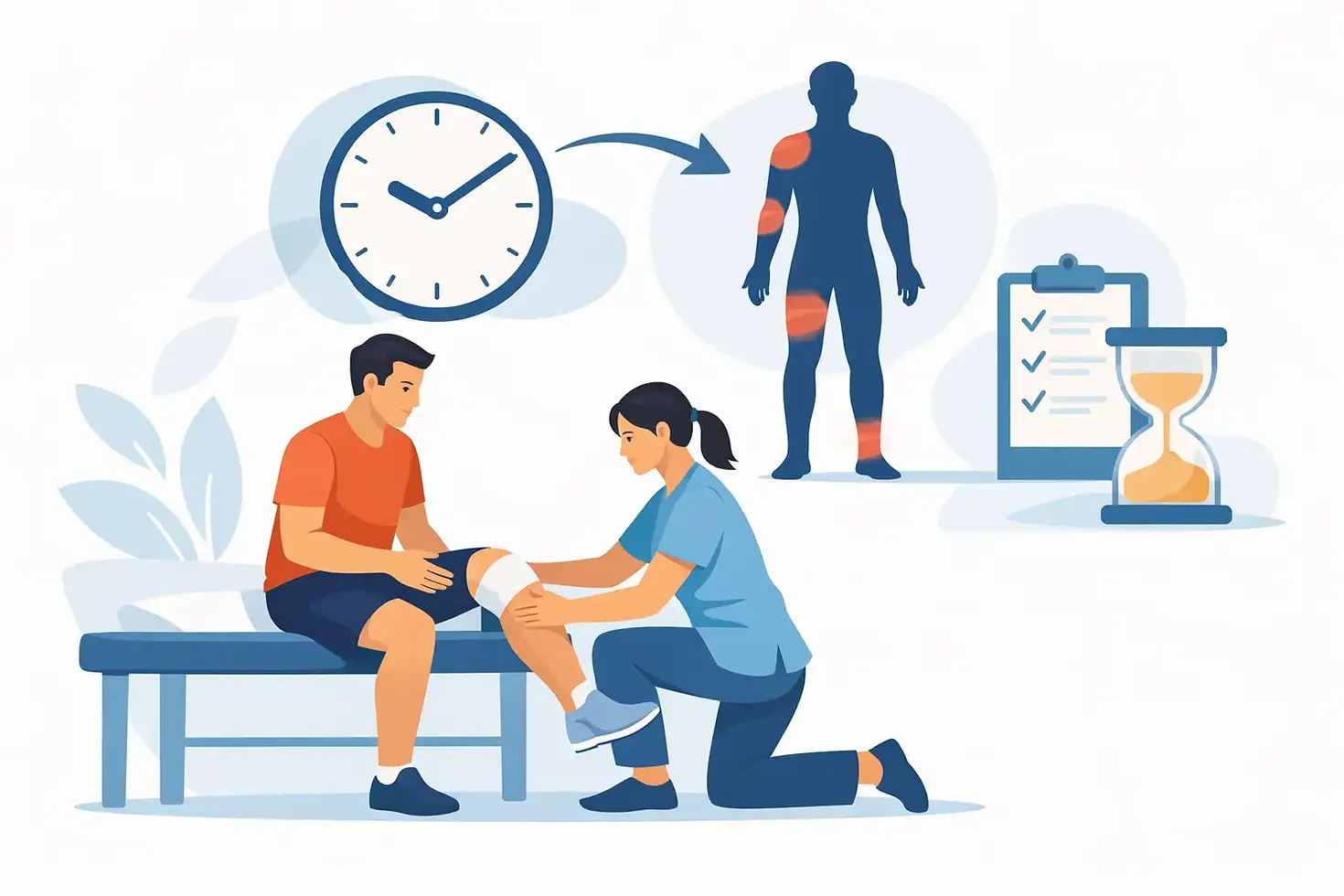
When to Start Injury Rehabilitation
- bhupiluhi
- Jul 2
- 6 min read
You twist your ankle, strain your back, or wake up the day after a fall feeling stiff and sore. The first question is usually, "Should I rest this for a while, or should I get it checked now?" When to start injury rehabilitation is one of the most important parts of recovery, because waiting too long can sometimes make pain, weakness, and movement problems harder to treat.
Many people still assume rehabilitation starts only after the worst pain has settled. In reality, rehab often begins much earlier than that. Early rehabilitation does not mean pushing through pain or returning to activity before your body is ready. It means getting the right guidance at the right stage, so healing tissues are protected while strength, mobility, and function are gradually restored.
When to start injury rehabilitation after an injury
In most cases, injury rehabilitation should begin as soon as it is safe to do so. That can be within the first 24 to 72 hours for many soft tissue injuries, depending on the type of injury, the level of pain, and whether a more serious issue needs medical assessment first.
The key point is that rehabilitation is not the same as intense exercise. Early rehab may be very gentle. It can include education, pain management strategies, protected movement, swelling control, breathing and positioning advice, and simple exercises that keep nearby joints and muscles active. Starting early helps prevent the cycle many patients know too well - pain leads to guarding, guarding leads to stiffness, and stiffness makes recovery slower.
That said, there is no single timeline that fits every injury. A mild muscle strain, a concussion, a workplace injury, and recovery after a motor vehicle accident all require different decisions. Good rehabilitation is based on what your body is telling us, not on a generic calendar.
Why early rehabilitation often leads to better outcomes
After an injury, the body needs time to heal, but it also needs the right kind of movement. Complete rest for too long can reduce joint mobility, decrease muscle activation, affect balance, and delay your return to normal activities. This is especially true for back pain, sprains, strains, and many overuse injuries.
Early physiotherapy can help reduce pain by improving how you move and by addressing irritation before compensation patterns become established. For example, if you limp for two weeks after an ankle sprain, the ankle is not the only area affected. Your knee, hip, and lower back may start taking extra load. What began as one injury can quickly turn into several problems.
Starting rehabilitation early also gives you clarity. Patients often feel unsure about what is safe. Should you walk on it? Stretch it? Stop working? Return to the gym? A proper assessment can answer those questions and lower the risk of doing too much or too little.
When you should not wait
Some injuries should be assessed as soon as possible. If you have significant swelling, severe pain, a visible deformity, inability to bear weight, numbness, dizziness, worsening headaches, suspected concussion, or symptoms that do not match a simple strain or sprain, you should seek prompt medical evaluation.
Even when emergency care is not needed, there are good reasons not to delay rehabilitation. If pain is interfering with sleep, work, driving, walking, or daily tasks, it is worth getting professional guidance early. The same is true if you have had a similar injury before, if the pain keeps coming back, or if you notice weakness, balance problems, or reduced range of motion.
For injured workers and people recovering after a car accident, early assessment is especially helpful. These cases often involve more than one area of pain, and symptoms can evolve over the first few days. A structured treatment plan can make the next steps clearer and support a safer return to regular function.
What early rehab actually looks like
One reason people hesitate is that they imagine rehabilitation starts with hard exercises. It usually does not. In the early phase, treatment is often focused on calming the injury while keeping you moving in the ways that support healing.
That may include hands-on treatment to reduce pain and stiffness, gentle mobility work, guided activation exercises, taping, soft tissue techniques, and advice on how to modify work, sport, or household activities. In some cases, additional treatments such as dry needling, shockwave therapy, massage therapy, or vestibular rehabilitation may be part of the plan, depending on the condition.
The goal is not to rush the process. The goal is to avoid losing time. There is a difference between respecting healing timelines and waiting passively for things to improve on their own.
When to start injury rehabilitation for common injuries
Sprains and strains
For many sprains and muscle strains, rehab can begin within a few days, sometimes sooner. Early treatment focuses on protecting the area, reducing swelling, restoring gentle movement, and gradually rebuilding strength. Waiting until pain is completely gone can actually delay progress.
Back and neck pain
With most mechanical back or neck injuries, gentle movement and early physiotherapy are usually better than extended bed rest. If there is no red flag such as serious trauma, loss of bladder or bowel control, or progressive neurological symptoms, early rehabilitation often helps reduce stiffness and improve confidence in movement.
Post-surgical rehabilitation
This depends on the surgery and your surgeon's recommendations. In many cases, rehabilitation begins very soon after surgery, sometimes within days. The exercises may be limited at first, but guided rehab is often essential to restore strength, mobility, and proper movement patterns.
Concussion and vestibular symptoms
The older advice was complete rest until symptoms disappeared. We now know that this is not always the best approach. After the initial rest period, many patients benefit from carefully graded rehabilitation. This should be directed by a qualified professional, especially if symptoms include dizziness, balance issues, visual problems, or exercise intolerance.
Chronic injuries or pain that has lingered
If an injury happened weeks or months ago, it is still not too late. In these cases, rehabilitation should start now. Persistent pain often involves more than tissue healing alone. Strength deficits, fear of movement, poor compensation patterns, and reduced tolerance to activity can all keep symptoms going. A personalized plan can still make a meaningful difference.
The risk of starting too early - and too aggressively
There is an important distinction between early rehabilitation and aggressive rehabilitation. Starting at the right time is helpful. Doing too much too soon is not.
If an exercise increases swelling, sharply increases pain, or leaves you worse for the next day or two, the load may be too high for that stage. Good rehab should challenge the body without overwhelming it. This is why individualized assessment matters. Two people with the same diagnosis may need different starting points based on age, health history, job demands, fitness level, and severity of injury.
A runner training for a race, a construction worker returning after a workplace injury, and a new mother dealing with pelvic pain after delivery may all need rehabilitation, but the plan should reflect their real life demands. That is where a hands-on, condition-specific approach becomes valuable.
Signs you are ready to progress in rehab
Recovery is rarely a straight line, but there are useful signs that the body is ready for the next step. Pain becomes easier to manage, swelling settles, movement improves, and daily tasks feel less restricted. You may notice better balance, more confidence loading the injured area, or less soreness after activity.
Progression should be based on function, not just time. Being told to "wait six weeks" without considering how you are actually moving is often not enough. What matters is whether the tissue is healing, whether you are regaining capacity, and whether the plan is helping you return to the activities that matter to you.
Why personalized rehabilitation matters
The real answer to when to start injury rehabilitation is simple but important: start as early as your injury safely allows, and make sure the plan matches your stage of healing. That timing can shorten recovery, reduce setbacks, and help prevent a short-term injury from becoming a long-term problem.
At Sterling Physiotherapy and Wellness, this often means assessing not only the injured area but also the movement patterns and strength deficits around it. Treating the root cause matters. If the goal is lasting recovery, rehabilitation has to do more than settle symptoms for a week or two.
If you are unsure whether it is too soon to begin, that uncertainty is usually a good reason to ask. Early guidance can be gentle, practical, and highly specific to your situation. The sooner you understand what your body needs, the sooner recovery can start moving in the right direction.


Comments