
Shockwave Therapy for Heel Pain: Does It Work?
- bhupiluhi
- Jun 12
- 6 min read
That first step out of bed can tell you a lot. If your heel feels sharp, tender, or oddly stiff first thing in the morning, you are not imagining it - and you are not alone. For many people dealing with plantar fasciitis or ongoing heel irritation, shockwave therapy for heel pain becomes part of the conversation when rest, stretching, and supportive footwear have not been enough.
Heel pain often starts small. A bit of soreness after a long day on your feet. A nagging ache during walks. Then it starts shaping your routine. You park closer, avoid stairs, cut back on exercise, and brace yourself every morning. At that stage, the goal is not just temporary relief. It is figuring out why the tissue is not recovering well and choosing treatment that supports real healing.
What causes heel pain in the first place?
Most persistent heel pain is linked to the plantar fascia, a thick band of connective tissue that runs along the bottom of the foot and supports the arch. When this tissue becomes overloaded, irritated, or degenerative over time, pain tends to show up near the heel bone. This is commonly called plantar fasciitis, although in longer-standing cases the issue is often less about active inflammation and more about tissue breakdown and poor healing response.
That distinction matters. If the problem has been there for months, simply trying to calm inflammation may not be enough. The tissue may need a stronger stimulus to repair.
Heel pain can also be influenced by calf tightness, limited ankle mobility, changes in training load, prolonged standing, unsupportive footwear, higher body load, and walking mechanics. In some cases, irritation of nearby nerves or the Achilles insertion can mimic plantar fascia pain. That is why a proper assessment matters before choosing treatment.
How shockwave therapy for heel pain works
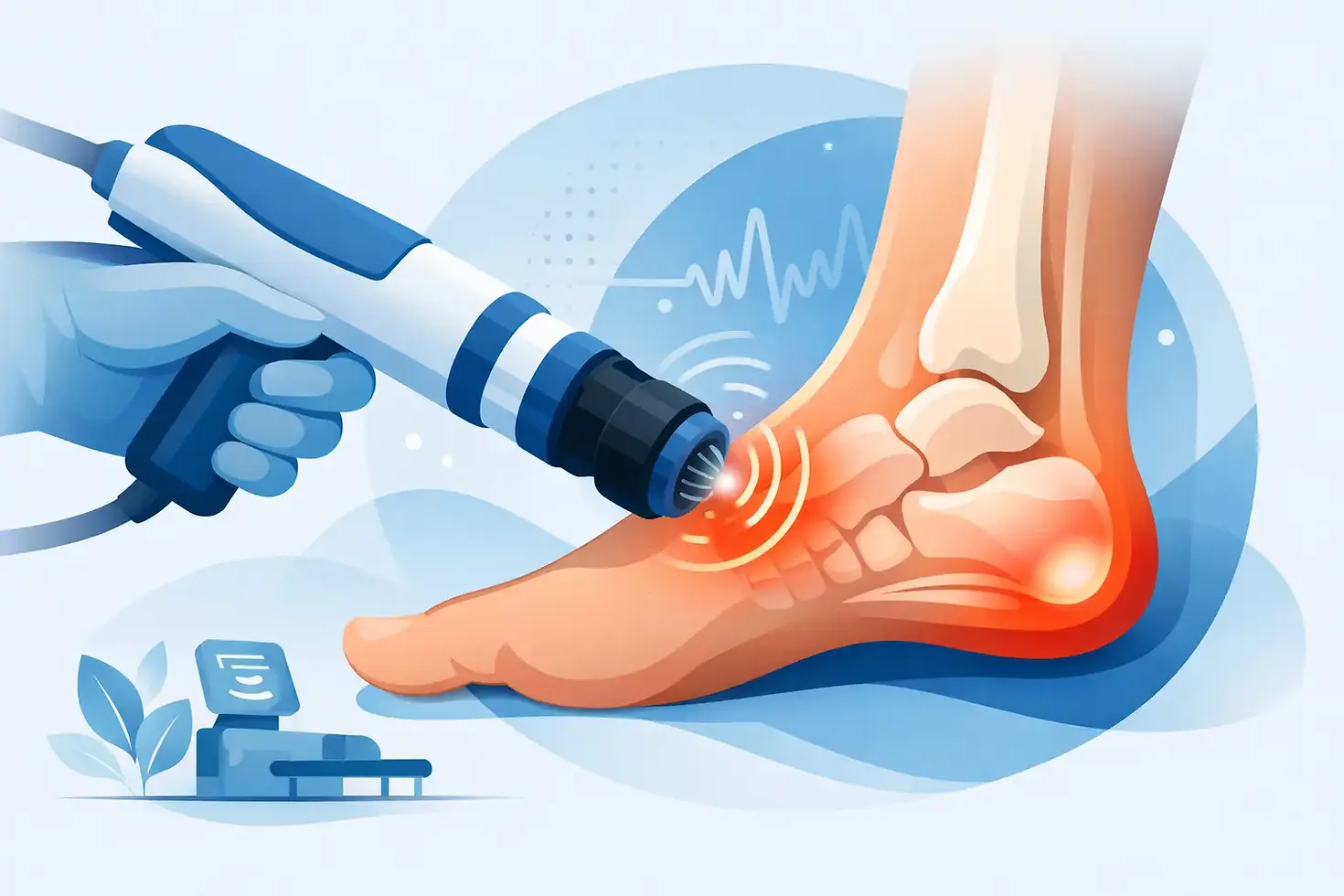
Shockwave therapy uses acoustic waves delivered to the affected tissue. These waves create a controlled mechanical stimulus that encourages the body to restart or improve its healing response. In practical terms, the treatment is meant to help stubborn tissue that has stopped recovering efficiently on its own.
For heel pain, shockwave therapy is typically applied to the plantar fascia near its attachment at the heel, and sometimes to surrounding tissues that are contributing to the problem. The treatment may help improve circulation, stimulate cellular activity, and reduce pain sensitivity in the area. It is not a passive cure, but it can be a useful tool when symptoms have become persistent.
This is one reason shockwave therapy is often recommended for chronic cases rather than brand-new pain. If your heel started hurting last week, your physiotherapist may begin with load modification, mobility work, taping, footwear advice, and targeted exercise. If the pain has lingered for months despite those efforts, shockwave can make more sense.
Who may benefit most from shockwave therapy?
Shockwave therapy tends to be most helpful for people with plantar fascia-related heel pain that has not improved with basic care. That often includes adults who stand for long hours at work, runners and active individuals trying to return to training, and people whose symptoms keep cycling between better and worse.
It may be a good fit if your heel pain has lasted longer than six to twelve weeks, especially if you have already tried stretching, orthotics, massage, or activity changes without lasting improvement. It can also be considered when morning pain is significant, walking tolerance is dropping, or the condition is limiting work and daily movement.
That said, it depends on the person. Shockwave is not appropriate in every case. Some medical conditions, certain medications, pregnancy, or specific tissue concerns may change whether it is recommended. A thorough assessment helps confirm whether the plantar fascia is truly the main pain source and whether this treatment fits your stage of recovery.
What a treatment session usually feels like
Most people want to know one thing first - does it hurt?
The honest answer is that it can be uncomfortable, especially when the treated area is already sensitive. The sensation is often described as a rapid tapping or pulsing over the sore point. The intensity can usually be adjusted, and treatment is kept within a tolerable range. A session is relatively short, and many patients find it manageable, particularly when they understand what it is targeting and why.
You may feel soreness afterward, similar to how tissue can feel after a deep treatment session or challenging exercise. That response is usually temporary. Some people notice a change quickly, while others improve gradually over several visits as the tissue response builds.
Shockwave is typically not a one-time treatment. It is often delivered as part of a series, combined with a broader physiotherapy plan.
Why shockwave works better with a full rehab plan
Heel pain rarely comes down to one irritated spot on the foot. The tissue became overloaded for a reason, and unless that reason is addressed, symptoms may return.
That is why shockwave therapy for heel pain is usually most effective when paired with individualized rehabilitation. A physiotherapist may look at calf flexibility, ankle joint mobility, foot strength, walking or running mechanics, and how your daily activities are loading the tissue. If your calf is stiff, your ankle motion is restricted, or your arch support muscles are not doing their share, the plantar fascia can keep taking the strain.
Treatment may include manual therapy, progressive strengthening, mobility work, taping, and guidance around footwear or activity pacing. In some cases, the biggest shift comes not from doing less, but from loading the tissue more appropriately and building strength around it.
This is where personalized care matters. A warehouse worker, a recreational runner, and someone recovering from months of reduced mobility may all have heel pain, but their plan should not look the same.
When to expect results
Shockwave therapy is not designed to numb pain instantly and send you back to full activity the next day. It is intended to support tissue recovery over time. Some people feel improvement within a couple of sessions, while others need several weeks before changes become more noticeable.
Recovery depends on more than the treatment itself. Duration of symptoms, overall health, tissue irritability, workload, footwear, and consistency with home exercises all play a role. Chronic heel pain that has been present for many months may take longer than a more recent case.
The key is progress, not perfection after one visit. If morning pain is easing, walking is less limited, and tenderness is gradually settling, those are meaningful signs that the condition is moving in the right direction.
Are there any downsides or limitations?
Like any treatment, shockwave has trade-offs. It can be very helpful for the right patient, but it is not magic, and it is not the answer to every type of heel pain. If the diagnosis is off, the expected results may not follow. If contributing factors are ignored, relief may be short-lived.
Some people find the treatment intensity unpleasant. Others may not respond as strongly as hoped, especially if the issue involves multiple structures or has become highly sensitized. In those cases, your physiotherapist may need to adjust the plan and use other strategies alongside or instead of shockwave.
That is not a failure. It is part of good clinical care. Effective treatment is not about forcing one method on every patient. It is about choosing the right tools for the condition in front of you.
When to seek help for heel pain
If your heel pain is affecting how you walk, limiting your activity, or lingering beyond a few weeks, it is worth getting assessed. The earlier you understand what is driving it, the easier it is to build a plan that supports recovery before the problem becomes more stubborn.
Heel pain can look simple from the outside, but the reasons it sticks around are often more complex. A hands-on assessment can help clarify whether the plantar fascia is involved, whether shockwave is appropriate, and what else needs to be addressed to improve long-term function. At Sterling Physiotherapy and Wellness, that process starts with understanding your symptoms, your activity demands, and the factors that may be slowing recovery.
If every morning step is making you hesitate, that is your signal to stop waiting it out. The right treatment should do more than reduce pain for a few days - it should help you move with more confidence, support lasting healing, and get you back to the activities your body has been avoiding.


Comments