

Best Treatments for Whiplash Recovery
- bhupiluhi
- May 10
- 6 min read
A sore neck after a car accident can seem manageable on day one and feel much worse by day three. That delayed stiffness is one reason people underestimate whiplash. When patients ask about the best treatments for whiplash recovery, the right answer is rarely just rest, or just massage, or just time. Recovery usually goes better with a plan that reduces pain, restores movement, and helps the body return to normal function without aggravating healing tissues.
Whiplash is a soft tissue injury that often affects the muscles, ligaments, joints, and nerves around the neck and upper back. It commonly happens in motor vehicle accidents, but it can also follow sports injuries, falls, or other sudden forceful movements. Some people recover quickly. Others deal with ongoing headaches, neck stiffness, shoulder tension, dizziness, jaw discomfort, or trouble concentrating. That is why early assessment matters. The sooner the cause of symptoms is understood, the easier it is to build treatment around what your body actually needs.
What are the best treatments for whiplash recovery?
The best treatments for whiplash recovery usually combine several approaches rather than relying on one passive treatment. In most cases, the strongest results come from a mix of physiotherapy, guided exercise, manual therapy, pain management strategies, and a gradual return to normal activity. The exact combination depends on symptom severity, how soon treatment begins, and whether there are related issues such as a concussion, vestibular symptoms, or upper back and shoulder involvement.
That individual approach matters because whiplash is not the same from one patient to the next. One person may have mostly muscular tightness and joint restriction. Another may have nerve irritation, dizziness, headaches, or fear of movement after a collision. Treating all of those cases the same would miss the root problem.
Early care matters more than complete rest
One of the biggest misconceptions about whiplash is that the neck should be protected by doing as little as possible for an extended period. Short-term rest may help during the most painful stage, but too much rest can contribute to stiffness, weakness, and slower recovery. The goal is usually controlled movement, not complete inactivity.
That does not mean pushing through severe pain. It means finding the right level of activity for the stage of healing. Early treatment often focuses on reducing irritation, improving comfort, and keeping the neck gently moving within a safe range. For many patients, this helps prevent the cycle of guarding and tension that can make symptoms linger.
Physiotherapy is often the foundation
For most people, physiotherapy is one of the most effective treatments for whiplash because it addresses both pain and function. A proper assessment looks at neck mobility, muscle guarding, posture, strength, joint mechanics, and related symptoms such as headaches or dizziness. From there, treatment can be adjusted as recovery changes.
Hands-on care can help reduce stiffness in the neck and upper back, especially when muscle spasm and joint restriction are limiting movement. Manual therapy may include gentle mobilization, soft tissue treatment, and techniques designed to improve how the neck and surrounding tissues move. That can make it easier to begin exercises without feeling like every movement is a setback.
Just as important, physiotherapy provides a clear progression. Early-stage exercises may focus on range of motion and gentle activation. Later, the program often shifts toward postural control, endurance, and strength so the neck can tolerate work, driving, lifting, and daily tasks again.
Exercise is a key part of lasting recovery
Patients are often relieved when pain treatment starts helping, but whiplash recovery is not only about calming symptoms. The neck needs to regain control and resilience. That is where exercise becomes essential.
The right exercise program helps restore mobility without overloading sensitive tissues. It can also retrain the deep neck muscles, improve shoulder blade control, and reduce strain through the upper back. These details matter because many whiplash symptoms are worsened by compensation patterns. If the smaller stabilizing muscles are not doing their job, larger muscles tend to tighten and overwork.
A common mistake is doing generic stretches found online without understanding whether they match the injury stage. Some exercises are useful early. Others are better saved for later when pain has settled and tolerance has improved. A guided program is usually safer and more effective than guessing.
Manual therapy can reduce pain and improve movement
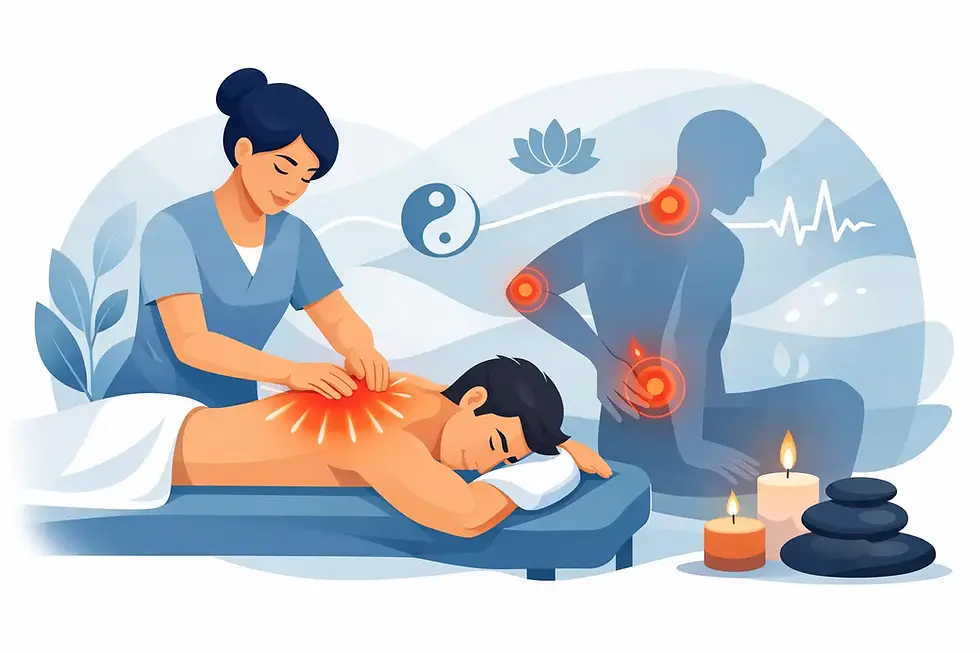
Manual therapy is not a stand-alone cure, but it can be very helpful within a broader treatment plan. When the neck and upper back become guarded after an injury, patients often develop limited turning, pain with looking up or down, and tension that spreads into the shoulders.
Targeted hands-on treatment may reduce that restriction and make movement feel more natural again. For some patients, this also helps decrease headaches that are related to neck tension and joint dysfunction. The trade-off is that hands-on treatment works best when paired with active rehabilitation. If treatment stays passive for too long, improvement may be temporary.
Massage therapy may also be useful for managing muscular tension, especially when the upper traps, levator scapulae, and surrounding tissues are contributing to discomfort. It can be a valuable part of care, but like manual physiotherapy, it works best as part of a recovery plan rather than the whole plan.
Pain relief should support movement, not replace it
Pain relief matters. If symptoms are intense enough to limit sleep, concentration, or basic movement, recovery gets harder. In the short term, strategies such as heat, ice, gentle mobility work, and medically appropriate pain medication can help reduce symptom intensity.
Still, pain relief alone is not the finish line. A patient may feel better temporarily while underlying stiffness, weakness, or poor movement patterns remain unchanged. The purpose of symptom relief is to create a better window for active recovery.
In some cases, additional treatment options such as dry needling may be considered when muscle tension and trigger points are keeping symptoms active. That depends on the presentation and should be guided by clinical assessment. Useful treatment is not about using every available technique. It is about choosing the ones that match the actual barriers to recovery.
When dizziness, headaches, or concussion symptoms are involved
Whiplash is not always limited to the neck. Some patients also report dizziness, balance issues, nausea, visual strain, or persistent headaches after an accident. In those cases, the treatment plan may need to include concussion or vestibular assessment rather than focusing only on the cervical spine.
This is an important point because neck dysfunction and concussion symptoms can overlap. A patient may assume all dizziness is just neck tension, or all headaches are simply part of whiplash. Sometimes that is true. Sometimes it is not. Proper assessment helps separate what is coming from the neck, what may be vestibular, and what requires a more integrated rehab approach.
What can slow recovery?
Several factors can make whiplash recovery take longer. Delaying treatment is one. Ignoring symptoms because imaging looks normal is another. Soft tissue injuries do not always show up clearly on scans, but they can still be very real and functionally limiting.
Recovery can also stall when patients stop moving entirely, return to full activity too aggressively, or rely only on passive treatment. Stress, poor sleep, and fear of re-injury can play a role too. Pain after an accident is not just physical. It can affect confidence, driving tolerance, work capacity, and daily routine.
That is why a structured plan tends to work better than a wait-and-see approach when symptoms are not improving as expected.
How long does whiplash recovery take?
There is no single timeline that fits everyone. Mild cases may improve within a few weeks. More significant injuries can take months, especially if treatment starts late or symptoms involve more than basic neck strain. The good news is that many patients improve steadily with the right care.
Progress is not always linear. It is common to feel better, then have a flare-up after driving longer, returning to work, or sleeping in an awkward position. That does not always mean damage has worsened. It may simply mean the body is still rebuilding tolerance.
Choosing the right care for whiplash
If you are looking for the best treatments for whiplash recovery, look for care that is personalized, active, and built around function. Effective treatment should not only ask where it hurts. It should ask what movements are limited, what activities trigger symptoms, and what needs to improve for daily life to feel normal again.
At Sterling Physiotherapy and Wellness, that kind of approach means combining hands-on treatment with progressive rehabilitation and clear guidance at each stage of recovery. The goal is not just to settle pain for a few days. It is to help patients move better, feel more confident, and return to work, driving, exercise, and daily life with less restriction.
If your neck pain, headaches, or stiffness are lingering after an accident, the most helpful next step is often a proper assessment. Good whiplash care is not about doing more treatment. It is about doing the right treatment, at the right time, for the right reason.


Comments